By: The Phoenix Warrior
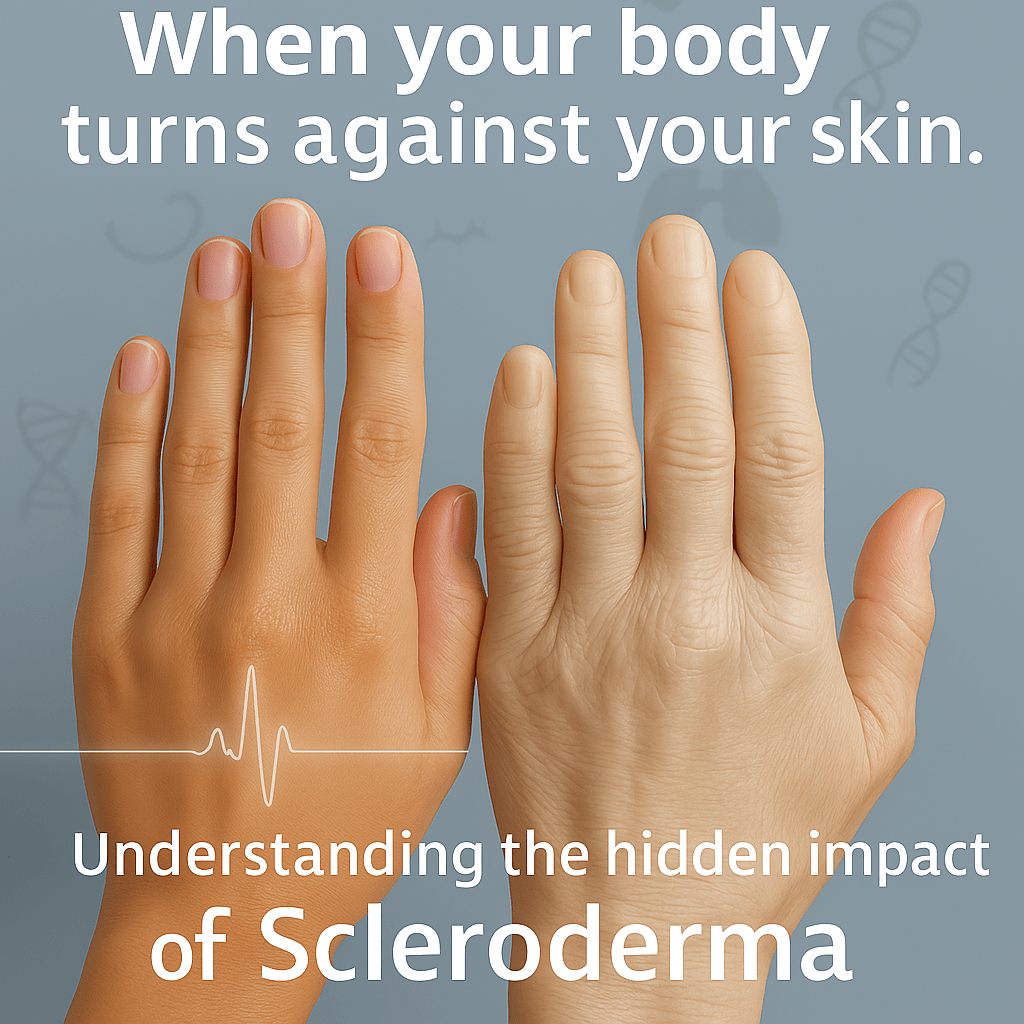
Understanding Scleroderma: Symptoms, Treatments, and Hope for Patients
Introduction
Imagine waking up one day to find your skin tightening, your fingers turning blue in the cold, or even struggling to swallow food. For people with scleroderma, a rare and complex autoimmune disease, these are daily realities. Affecting an estimated 75,000 to 100,000 Americans (NIH), scleroderma is more than just a skin condition—it’s a disorder that can attack internal organs, blood vessels, and connective tissues. Yet, despite its challenges, advances in research and treatment are offering new hope.
This article explains what scleroderma is, how it’s diagnosed and treated, and provides practical ways patients can manage their lives with this condition.
What Is Scleroderma?
Scleroderma, meaning “hard skin” in Greek, is a chronic autoimmune disease in which the immune system mistakenly attacks healthy tissue, leading to excessive collagen production. This causes thickening and hardening of the skin, and in some cases, damage to internal organs, such as the lungs, heart, and digestive system.
Types of Scleroderma
- Localized Scleroderma – Primarily affects the skin, often in patches (morphea) or lines (linear scleroderma). More common in children.
- Systemic Sclerosis – The more severe form, divided into:
- Limited Cutaneous (lcSSc) – Skin thickening on hands, arms, and face; includes CREST syndrome (Calcinosis, Raynaud’s, Esophageal dysmotility, Sclerodactyly, Telangiectasia).
- Diffuse Cutaneous (dcSSc) – Rapid skin hardening across the body, with a higher risk of organ damage.
Symptoms
Symptoms vary but may include:
- Skin changes: Tight, shiny skin, especially on the fingers and hands (sclerodactyly).
- Raynaud’s phenomenon: Fingers/toes turning white/blue in response to cold or stress.
- Digestive issues: Acid reflux, difficulty swallowing (dysphagia), bloating.
- Pulmonary complications: Shortness of breath, pulmonary fibrosis, or hypertension.
- Joint/muscle pain: Stiffness and inflammation.
Causes & Risk Factors
The exact cause is unknown, but researchers believe a combination of factors triggers scleroderma:
- Genetics: Certain gene variants increase susceptibility to the condition.
- Environmental triggers: Exposure to silica dust, certain chemotherapy drugs, or viral infections.
- Gender & Age: Women are four times more likely to develop it, typically between the ages of 30 and 50.
Diagnosis: How Is Scleroderma Detected?
Diagnosing scleroderma can be tricky due to its varied symptoms. Doctors use:
- Physical exams: Checking for skin thickening, Raynaud’s, or nailfold capillary changes.
- Blood tests: Looking for anti-nuclear antibodies (ANA), anti-Scl-70 (common in dcSSc), or anti-centromere (common in lcSSc).
- Imaging: X-rays, CT scans (to check lung fibrosis), or echocardiograms (for pulmonary hypertension).
- Biopsies: Skin samples to confirm collagen buildup.
Treatment Options
While there’s no cure yet, treatments focus on managing symptoms and slowing progression:
- Medications:
- Immunosuppressants (methotrexate, mycophenolate) to reduce immune system attacks.
- Vasodilators (calcium channel blockers) for Raynaud’s.
- Proton pump inhibitors (PPIs) for acid reflux.
- Pulmonary care: Oxygen therapy or medications such as nintedanib for lung fibrosis.
- Physical therapy: To maintain joint mobility and skin flexibility.
- Experimental treatments: Stem cell transplants (for severe cases) and biologic drugs in clinical trials.
Living With Scleroderma: Coping Strategies
The emotional and physical toll can be overwhelming, but these strategies help:
- Skin care: Moisturize frequently, avoid harsh soaps, and protect your skin against cold weather.
- Diet modifications: Smaller meals, avoiding spicy foods (for reflux).
- Support networks: Organizations like the Scleroderma Foundation offer resources and community.
- Mental health: Therapy or support groups to manage anxiety/depression.
The Future of Scleroderma Research
Promising developments include:
- Biologics targeting specific immune pathways.
- Stem cell therapy to regenerate damaged tissue.
- Early detection tools to intervene before organ damage occurs.
Myths vs. Facts
❌ Myth: Scleroderma is just a skin condition.
✅ Fact: It’s a systemic disease that can affect organs.
❌ Myth: Only older adults get scleroderma.
✅ Fact: It can occur at any age, even in children.
Conclusion
Scleroderma is a challenging disease, but with early diagnosis, proper treatment, and a strong support system, patients can lead fulfilling lives. If you or a loved one experiences symptoms like unexplained skin thickening or Raynaud’s, consult a rheumatologist.
Stay informed. Advocate for care. There’s hope on the horizon.
Sources:
- National Institute of Arthritis and Musculoskeletal and Skin Diseases (NIAMS)
- Scleroderma Research Foundation
- Mayo Clinic, Johns Hopkins Medicine
 thephoenixflare.wordpress.com
Leave a comment