By the Phoenix Warrior
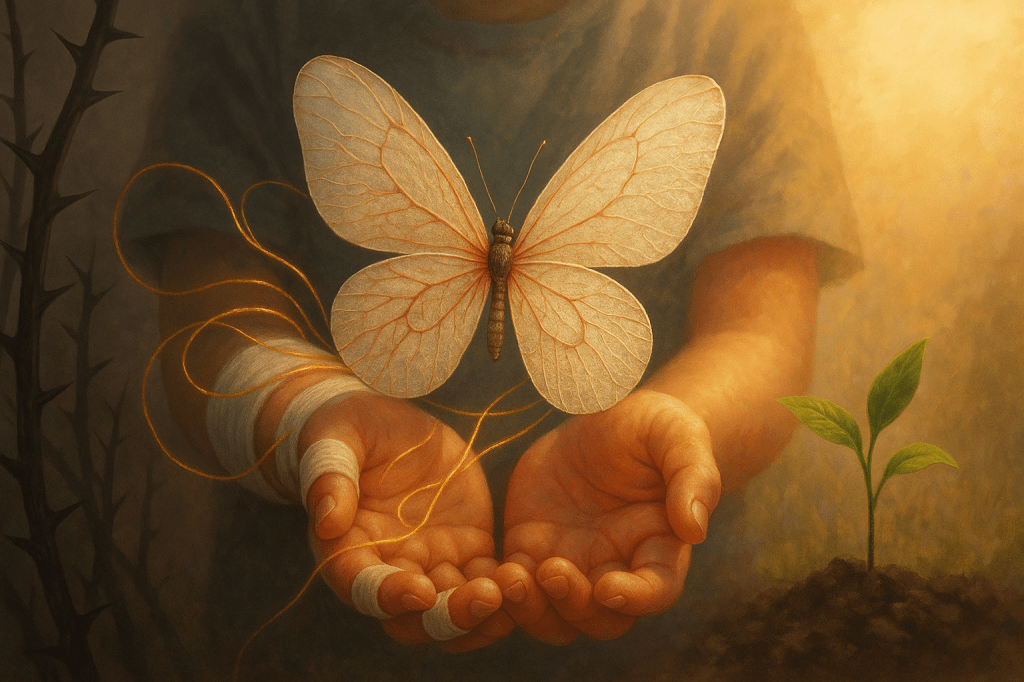
A Mother’s First Glimpse: Christina’s Story
When Christina’s son Alex entered the world, instead of joyful first cuddles, she faced a nightmare: her newborn lacked skin on his hands and feet. Within days, his condition worsened. “Receiving the diagnosis of Epidermolysis Bullosa (EB) brought little comfort,” she recalls. “Watching someone you love suffer and not be able to take it away seems impossible to endure.” For Veronica, mother to Shaelynn, EB means daily battles: meticulously lancing new blisters with sterile needles. At the same time, her toddler pleads “no no no,” and she bathes her in bleach to prevent infections. Yet both mothers speak of unexpected strength. Veronica adds: “EB means seeing heart, passion, and strength in a tiny warrior who laughs when others would cry”.
This is life for “butterfly children” – those with EB, where skin becomes as fragile as a butterfly’s wings.
1 The Science Behind the Fragility: What is EB?
Epidermolysis Bullosa is a group of rare genetic disorders (affecting ~1 in 20,000 births) characterized by extremely fragile skin that blisters or tears from minimal friction, even a hug, clothing seam, or gentle touch. It results from mutations in genes responsible for producing proteins (like collagen or keratin) that anchor skin layers together. When these proteins are defective, friction causes the layers to separate, forming painful wounds.
1.1 Major EB Subtypes:
| Type | Genetic Cause | Severity | Prognosis |
| EB Simplex | Keratin defects (top skin layer) | Mild to moderate | Often improves with age |
| Junctional EB | Laminin/collagen defects | Severe; affects internal organs | High infant mortality |
| Dystrophic EB | Collagen VII defects | Severe, chronic scarring | High risk of aggressive cancer |
Lylah’s parents knew she had a 50% chance of inheriting EB. At birth, her feet were raw, fingers encased in blisters. “EB is likened to living with third-degree burns,” her mother explains. Although her subtype (likely EB Simplex) improved with age, daily life remains a minefield: she requires modified clothing, lambswool-lined car seats, and seams sewn inside-out to prevent blisters.
2 Beyond Skin Deep: Systemic Impacts
EB isn’t just a skin condition:
- Nutritional Challenges: Blistering in the mouth/esophagus complicates eating. Many require soft diets or feeding tubes
- Anemia: Chronic blood loss from wounds depletes iron stores. Two thousand twenty-three guidelines outline tailored treatments
- Cancer: Those with recessive dystrophic EB face ~85% lifetime risk of aggressive squamous cell carcinoma 2.
- Psychosocial Toll: Isolation, anxiety, and depression are common. In 2019, psychosocial guidelines emphasized the importance of mental health support.
3 Daily Care: A Labor of Love and Precision
Managing EB demands meticulous protocols:
3.1 Wound and Pain Management:
- Blisters: Drained daily with sterile needles to prevent expansion
- Bandaging: Non-adhesive dressings (often burn-specific) are applied after ointments; the process can take 2–3 hours daily.
- Pain Control: Multimodal approaches (topical lidocaine, opioids, non-pharmacological methods) per 2014 pain guidelines
3.2 Specialized Care Teams:
- Hand Surgery/OT: 2022 guidelines outline preserving hand function amid scarring
- Foot Care: Custom shoes/silicone sleeves prevent friction (2019 foot guidelines)
- Oral Health: Use soft-bristled brushes and antimicrobial rinses, as recommended by the 2020 dental guidelines.
Table: Essential Care Principles for EB
| Body System | Care Need | Solution |
| Skin | Blister prevention | Silk clothing, no seams, lambswool padding |
| GI Tract | Constipation management | High-fiber purees; osmotic laxatives |
| Mobility | Physical therapy | Gentle exercises to prevent contractures |
| Mental Health | Family support | EB-specific counseling; peer mentorship |
4 Lifelines of Support: Resources for the EB Community
4.1 Global DEBRA Network:
This nonprofit alliance provides:
- Wound Care Supplies: Free bandages/ointments shipped worldwide
- EB Nurse Educators: Phone/email support for care questions
- New Family Advocates: Care packages with supplies and educational materials
- Smile Funds: Mini-wishes granted monthly to bring joy (e.g., adaptive toys)
In 2024 alone, Debra of America served families in all 50 U.S. states, delivered over 700 care packages, and hosted conferences connecting more than 700 families with EB experts.
4.2 Critical Guidelines:
The EB Clinet offers downloadable clinical practice guidelines covering:
- Neonatal care (2024)
- Anemia management (2023)
- Palliative care (2023)
- Sexual Health Support (2021), p. 25.
5 Research Horizon: From Symptom Relief to Cures
While no cure exists, promising advances include:
- ELK-003: A topical therapy promoting wound healing
- mRNA-Based Editing: Precision gene correction to restore skin proteins
- Bespoke Therapies: Personalized treatments for recessive dystrophic EB
Organizations like Cure EB have funded over 40 projects, raising £17M toward transformative therapies.
6 Conclusion: Wings of Hope
For Alex, Shaelynn, and Lylah, EB means pain and relentless care – but also resilience. As Christina reflects: “EB means filling my heart with hope instead of despair… I hope someday a cure ends his suffering.” With robust support networks, cutting-edge research, and global collaboration, the future holds unprecedented promise for butterfly children to soar beyond their fragile beginnings.
For clinical practice guidelines, patient stories, or support services, visit: debra.org, eb-clinet.org, or cure-eb.org.
 thephoenixflare.wordpress.com
Leave a comment