By the Phoenix Warrior
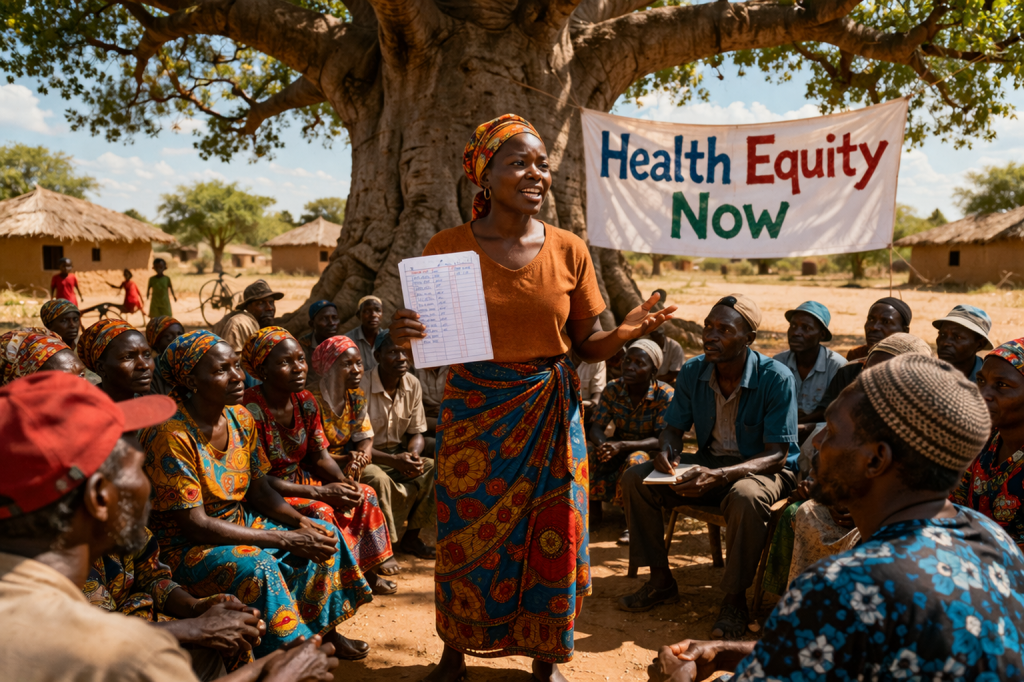
When a patient receives a life-altering diagnosis in a developing country, they often face more than the disease itself: stigma, poverty, and a health system too fragile to catch them. Yet across the world, ordinary patients and caregivers are proving that solidarity is a form of medicine and a collective voice can move mountains. This article explores the quiet revolution of patient support and advocacy groups—drawing a critical distinction between the hand that holds you through suffering and the voice that demands systemic change. Through powerful examples like the HIV Treatment Action Campaign, rare disease movements, and grassroots sickle cell networks, it reveals why these groups are not merely beneficiaries of aid but essential architects of health equity. Their story is a testament to what becomes possible when those who live with illness refuse to face it alone.
The Quiet Revolution: Why Patient Groups Are the Untold Force in Global Health
For decades, the architecture of health care was built on a simple hierarchy: the doctor treated, the patient obeyed, and the government or hospital delivered. The patient’s voice—if it existed at all—was a whisper lost in a corridor of clinical authority. Then came a quiet revolution, sparked not by institutions, but by people sitting in living rooms, hospital waiting rooms, and around kitchen tables. They were bound by a shared diagnosis, a common fear, and a radical idea: that those who live with a disease should have a seat at the table where decisions about that disease are made.
Patient support and advocacy groups have since transformed from informal gatherings into some of the most powerful forces in health care. They have changed laws, rewritten research agendas, and, most importantly, ensured that no one faces illness alone. In high-income countries, their impact is well documented. But in developing countries—where health systems are fragile, resources scarce, and stigma often runs deepest—their role is nothing short of life-saving.
To understand their power, we must first understand the two distinct yet intertwined pillars they rest upon: support and advocacy. Though often housed under the same roof, they serve different, equally essential purposes.
The Difference Between Patient Support and Patient Advocacy
Patient support is the safety net. It is the immediate, tangible, and emotional scaffolding that helps patients and caregivers survive the day-to-day reality of illness. Support answers the question: “How do I live with this condition?” It takes the form of peer-to-peer counseling, helplines, support group meetings, transport assistance to clinics, adherence clubs for medication, and practical resources like food or sanitary supplies. Support is often intimate, personal, and focused on the individual’s journey. Its success is measured in reduced isolation, improved treatment adherence, and the quiet dignity of shared experience.
Patient advocacy, on the other hand, is the megaphone. It answers the question: “How do we change the system that shapes our condition?” Advocacy operates at the level of policy, rights, and structural change. It involves lobbying the Ministry of Health for essential medicines, demanding that pharmaceutical companies lower prices, pushing for non-discrimination laws, or insisting that clinical research includes patient-centered outcomes. Advocacy can be confrontational or collaborative, but its aim is always to shift power and resources toward patients’ needs.
If support is the hand that holds you when you fall, advocacy is the voice that asks why the floor was slippery in the first place. Neither is complete without the other. Support without advocacy leaves the root causes of suffering unaddressed; advocacy without support can become disconnected from the lived reality of those it claims to represent.
The Power of Patient Groups: Three Defining Examples
When we look at history, the moments when patient groups changed the world are unmistakable. They offer a blueprint for what is possible, even in the most difficult settings.
1. HIV/AIDS: The Birth of the Treatment Activist
Perhaps the most iconic example of patient power is the global response to HIV/AIDS. In the 1980s and 1990s, a diagnosis of HIV was considered a death sentence, especially in sub-Saharan Africa, where antiretroviral therapy (ART) was priced astronomically out of reach. Governments and pharmaceutical companies were slow to act.
It was patient advocacy groups—ACT UP in the United States, and later the Treatment Action Campaign (TAC) in South Africa—that shattered the status quo. TAC, founded by activists like Zackie Achmat, combined street protests with legal action and scientific literacy. They famously clashed with pharmaceutical giants to force down the price of ART and with their own government to compel the provision of prevention of mother-to-child transmission (PMTCT) services.
But TAC also understood the indispensability of support. They established a network of “treatment literacy” camps where people living with HIV learned to understand their CD4 counts, adhere to medication, and counsel their peers. They combined the megaphone with the safety net. The result was one of the most dramatic public health victories in history: the price of ART fell by over 90%, and millions of people in low-income countries gained access to life-saving treatment. Today, the global HIV response remains a testament to what happens when patients become advocates and supporters become movement-builders.
2. Rare Diseases: The Courage of Small Numbers
In the realm of rare diseases, patient groups have repeatedly achieved what neither market forces nor governments could. Consider the case of spinal muscular atrophy (SMA), a devastating genetic disorder. In countries like Brazil and India, patient families organized themselves into associations—such as Instituto Vidas Raras in Brazil and Cure SMA in India—to advocate for newborn screening, access to gene therapies, and inclusion in clinical trials.
These groups faced a double challenge: the diseases were little understood, and the treatments were prohibitively expensive. Yet through relentless advocacy, they persuaded national health systems to list SMA therapies, often priced at over $2 million per patient, as essential medicines. Their support networks provided families with wheelchairs, respiratory equipment, and emotional solidarity. What made these victories possible was the willingness of patients and caregivers to become experts—not just in their condition, but in health economics, regulatory pathways, and litigation. They proved that even the smallest constituency, when organized, can bend the arc of health policy.
3. The Developing Country Context: The Mothers of Sickle Cell
In many low-resource settings, patient groups are often the only functioning support system. Take the example of sickle cell disease (SCD), a genetic blood disorder that disproportionately affects people in sub-Saharan Africa, India, and the Middle East. In Nigeria, where SCD is rampant, a network of grassroots groups—such as the Sickle Cell Foundation Nigeria and local parent-led associations—has filled a vacuum left by the public health system.
These groups provide newborn screening (often funded by member contributions), counsel parents on how to manage painful crises, advocate for the inclusion of hydroxyurea (a low-cost, essential medicine) on national essential drug lists, and fight against the deep stigma that has historically led to children with SCD being labeled “spirit children” and abandoned. By combining support (family-to-family mentoring, crisis transport funds) with advocacy (demanding that the government establish SCD clinics in every state), they have transformed a disease once shrouded in shame into a national priority. Their work has led to the creation of Nigeria’s National Sickle Cell Centre and a growing political commitment to universal newborn screening.
Why Patient Groups Are Indispensable—Especially in Developing Countries
In high-income nations, patient groups often focus on influencing pharmaceutical pricing, research funding, and clinical guidelines. In developing countries, their role is far more foundational. They are often:
- Safety-net providers: When clinics lack nurses, patient volunteers serve as adherence counselors. When hospitals run out of medication, groups pool resources to buy it from private pharmacies.
- Stigma breakers: In settings where disease is associated with witchcraft or moral failure, a group of patients meeting openly is a radical act. It normalizes the condition and offers a new identity beyond illness.
- Accountability enforcers: Governments often neglect chronic diseases in favor of acute emergencies. Patient groups transform “invisible” diseases into political issues by documenting stock-outs, tracking maternal deaths, and giving a human face to policy failures.
- Bridges to formal systems: International donors and NGOs often struggle to reach the most marginalized. Patient groups have pre-existing trust, local language skills, and community relationships that make them ideal partners for scaling up interventions.
The Cost of Their Absence
When patient groups do not exist, the consequences are stark. Without support, patients default to isolation, abandoning treatment due to fear or despair. Without advocacy, systemic failures go unchallenged—essential medicines remain unaffordable, diagnostic tests are unavailable, and discriminatory policies remain untouched. In many developing countries, the absence of a patient group for a given condition means that the condition effectively does not exist in the public consciousness.
Building a patient support and advocacy group in a developing country setting is a challenging but profoundly impactful endeavor. Unlike in high-resource settings, you will likely face unique hurdles: limited infrastructure, poverty, low health literacy, cultural stigma, and a lack of legal frameworks for patient rights.
This guide provides a step-by-step roadmap, structured into five phases: Foundation, Structure, Programming, Sustainability, and Impact.
Phase 1: The Foundation (Months 1-6)
Before registering an organization, you must understand the ecosystem and build a core of trusted individuals.
Step 1: Identify the Core Need and Niche
Do not try to do everything for everyone. Focus is critical for survival.
- Conduct a Situational Analysis:
- Identify the disease/condition: Is it a neglected tropical disease (e.g., lymphatic filariasis), a non-communicable disease (e.g., diabetes, sickle cell), a communicable disease (e.g., HIV/TB), or a disability group?
- Map the existing landscape: Who else is working in this area? Is there a government clinic? An international NGO? Are there informal support networks (e.g., church groups, traditional healers)?
- Identify the gap: Are patients dying due to a lack of access to medication? Are children being pulled out of school due to stigma? Is there a lack of diagnostic equipment? Your group’s value proposition must fill a specific gap.
Step 2: Assemble a Core “Invisible” Committee
In many developing countries, trust is personal, not institutional. Gather 3-5 trusted individuals.
- Who to include:
- A Patient/Caregiver: Must have lived experience to ensure authenticity.
- A Respected Local Figure: A religious leader, teacher, or village chief who can open doors and provide social credibility.
- A Medical Ally: A local nurse, clinical officer, or doctor who understands the medical landscape and can verify your information.
- A “Fixer”: Someone who understands local bureaucracy, registration processes, and logistics.
Step 3: Conduct Community Entry and Dialogue
Do not assume you know what patients need. Go to where they are.
- Use existing structures: Attend local “barazas” (community meetings), religious services, or market days.
- Listen more than you speak: Ask open-ended questions: “What is the hardest part of living with this condition?” “What happens when you go to the clinic?” “What would make your life easier?”
- Identify informal leaders: Often, a patient who has been living with the condition for years is already an unofficial advocate. Co-opt them respectfully.
Phase 2: Legal Structure and Governance (Months 6-12)
Operating illegally is risky. However, registration can be expensive and bureaucratic. Start with a clear strategy.
Step 4: Choose the Right Legal Status
- Start informally: You do not need registration to start meeting. You can operate as a community-based organization (CBO) or a self-help group for the first year.
- Progress to formal registration: Decide on the structure that fits your country’s laws (e.g., NGO, Foundation, Trust, or Cooperative).
- Tip: If registration fees are prohibitive, partner with a larger, already-registered national NGO to serve as your fiscal sponsor for the first 1-2 years. They can receive funds on your behalf while you build your governance record.
Step 5: Develop Simple, Context-Appropriate Governance
Avoid copying complex Western bylaws. Keep it simple.
- Constitution/Bylaws: Draft a simple document outlining the group’s objectives, membership criteria, and how leaders are elected.
- Leadership: Establish a Board of Directors or Executive Committee.
- Critical: Ensure this board includes patients (or caregivers) to prevent the group from becoming a “do-gooder” organization run solely by outsiders.
- Critical: Ensure there is a clear separation of duties. The person managing the money should not be the same person signing the checks (segregation of duties to prevent corruption).
Phase 3: Programming and Service Delivery (Ongoing)
In a developing country, advocacy is often intertwined with direct service delivery because patients cannot advocate if they are starving or cannot afford transport to the hospital.
Step 6: Establish a Physical or Virtual Presence
- Physical: A physical office is expensive. Instead, use “satellite” models.
- Rent a room at a local health center for support group meetings.
- Use a community hall or church basement.
- Partner with a local hospital to use their outpatient department (OPD) waiting area for registration and peer counseling.
- Virtual: Leverage low-tech solutions.
- WhatsApp/Telegram: In many developing countries, these are the de facto internet. Create group chats for different regions or sub-groups (e.g., newly diagnosed, caregivers). Establish strict confidentiality rules regarding patient photos and status.
Step 7: Build the Core Program: The Peer Support Group
This is your backbone.
- Format: Meet monthly or bi-monthly. Meetings should combine medical education (with an invited nurse speaker) with social time.
- Incentives: In low-resource settings, people may not attend without incentives. Provide what you can: a meal (shared lunch), transport reimbursement, or practical goods (e.g., soap, diapers for incontinence).
- The “Expert Patient” Model: Identify patients who have managed their condition well and train them to be peer mentors. They are often more effective than doctors at convincing others to adhere to treatment.
Step 8: Initiate Advocacy (The “Winnable” Fight)
Start with small, achievable advocacy goals to build credibility.
- Hospital Advocacy: Meet with the hospital administrator. Ask for one small change: “Can we reserve a bench near the pharmacy for our patients who are too weak to stand?” or *“Can we have a 15-minute window to speak to newly diagnosed patients?”*
- Supply Chain Advocacy: If there is a stock-out of essential medicine, document it. Write a simple, professional letter to the District Health Officer. Show them the data (e.g., “Last month, 30 of our members could not buy insulin”). Do not start with public confrontation; start with partnership.
Phase 4: Sustainability and Resource Mobilization (Critical)
Many groups fail because they rely on one donor or run out of money. Diversify early.
Step 9: Develop a Low-Cost Fundraising Strategy
- Membership Contributions: Even a nominal fee ($0.50 per month) fosters a sense of ownership. Frame it as “solidarity” rather than a fee. Create a savings box for emergencies (a common concept in many cultures).
- Diaspora Engagement: If the condition is prevalent, there is likely a diaspora community from your country abroad. Reach out via social media. They often send remittances and can fund specific items (e.g., a refrigerator for insulin storage).
- Local Businesses: Approach local businesses (pharmacies, banks, transport companies) for corporate social responsibility (CSR) donations. Offer them visibility (e.g., logo on your monthly meeting banner).
- International Grants: Apply for small grants from international foundations focused on global health (e.g., The Global Fund’s community grants, the American Cancer Society, GSK, or local embassies).
- Tip: When writing grants, emphasize local ownership and value for money. Donors are wary of high administrative costs in developing contexts.
Step 10: Build Capacity (Train the Trainer)
You must invest in your members.
- Financial Literacy: Train the treasurer on basic bookkeeping. Many groups fail due to poor record-keeping, not theft.
- Digital Literacy: Teach volunteers how to use Excel for patient registers or Google Drive for cloud backup.
- Advocacy Training: Train patients on how to speak to the media and policymakers without fear. Role-play meetings with the Ministry of Health.
Phase 5: Monitoring, Adaptation, and Scale (Year 2+)
Step 11: Implement Simple M&E (Monitoring & Evaluation)
To prove your value to donors and the government, you need data. Keep it simple.
- Patient Registry: Keep a manual or digital log of members. Track basics: Name, age, village, diagnosis, and status (alive, lost to follow-up, deceased).
- Success Stories: Document qualitative data. A story about a grandmother who regained the ability to walk because your group provided transport to physiotherapy is more powerful than a statistic.
Step 12: Scale Through Partnerships
Do not try to be the only player.
- Formalize relationships with the Ministry of Health: Ask to be listed as a “community partner.” This gives you legitimacy.
- Link to National Networks: Join a national umbrella body for NGOs or a regional patient group network. This gives you a voice in national policy.
- Replication: Once your model works in one district, document the process and replicate it in another district by identifying local leaders there.
Critical Considerations for Developing Country Contexts
- Stigma Management: In many cultures, disease is seen as a curse or a moral failing.
- Strategy: Use culturally sensitive language. Frame the group as a “wellness club” or “social welfare association” rather than a “disease group.” Engage religious leaders to denounce stigma from the pulpit publicly.
- Literacy Levels:
- Strategy: Use pictorial aids for consent forms and educational materials. Use radio (which has a wide reach) rather than pamphlets for awareness campaigns.
- Transportation and Geography:
- Strategy: If patients cannot travel to you, create “cluster groups” in different villages. Use a “hub and spoke” model where a central coordinator visits satellite groups once a quarter.
- Corruption and Bureaucracy:
- Strategy: Maintain extreme transparency. Publish financial reports at every annual general meeting (AGM). Keep copies of all registration documents with multiple members. If officials ask for bribes to register, seek pro bono legal help from a local law school or legal aid clinic.
- Gender Dynamics:
- Strategy: In many settings, women are the primary caregivers but have less decision-making power. Ensure women are represented in leadership. Be mindful that support group meeting times should accommodate women’s domestic responsibilities (e.g., avoid early mornings when they are cooking or fetching water).
Building a patient advocacy group in a developing country is less about sophisticated lobbying and more about presence, trust, and practicality. Your first milestone is not a law passed in parliament; it is one patient who stopped hiding in their home because your group gave them hope. Start small, focus on solving one tangible problem (like access to transportation or a stock-out of medicine), build a reputation for integrity, and let the community’s trust be the foundation upon which you scale.
A Call to Recognize, Resource, and Respect
The narrative that patient groups are merely “emotional support” or “beneficiaries” of aid is outdated. In reality, they are co-producers of health outcomes, experts in lived experience, and often the most accountable actors in a fragmented health system. The global health community—governments, donors, and multilateral agencies—must shift from seeing patient groups as recipients of charity to recognizing them as strategic partners.
This means funding their core operations, not just project activities. It means involving them in policy design from the outset, not as an afterthought. And it means protecting their autonomy, ensuring that they can speak truth to power without fear of reprisal.
The examples of TAC, rare disease associations, and sickle cell groups reveal a common thread: patient movements are born of suffering, but they thrive on solidarity, knowledge, and the unshakeable belief that no one should have to navigate illness alone. In developing countries, where the health system is often overstretched and under-resourced, patient groups are not just nice to have—they are essential. They are the quiet revolution that has already begun. It is time we listened to their voices and amplified them.
 thephoenixflare.wordpress.com
Leave a comment